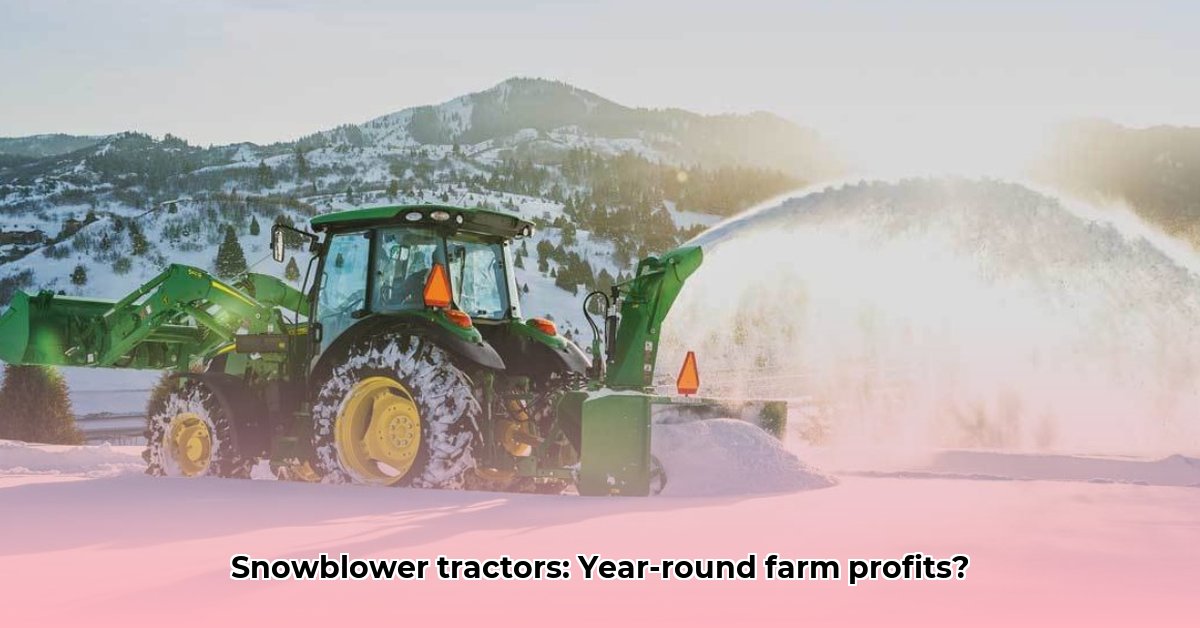
Snowblower Tractors: Unlocking Year-Round Farm Profits with John Deere
Tired of idle land and seasonal income? Imagine consistent profitability, regardless of the time of year. Year-round farming, facilitated by John Deere's snowblower tractor attachments, transforms seasonal operations into resilient, profitable enterprises. This isn't just about extra cash; it's about building a sustainable and secure agricultural future. But how can you make this transition? This guide provides a practical, step-by-step approach. For more information on snowblower tractor attachments, visit this helpful resource.
The All-Season Advantage: Year-Round Farming
Why embrace year-round farming? The benefits are substantial and far-reaching:
- Increased Revenue: Consistent income streams replace the unpredictable nature of seasonal farming, creating financial stability. "Consistent cash flow is the lifeblood of any successful farm," says Dr. Emily Carter, Agricultural Economist at Purdue University.
- Reduced Risk: Diversification mitigates the impact of market fluctuations and unforeseen weather events. If one revenue stream falters, others can compensate.
- Improved Soil Health: Strategic year-round land management, including cover cropping, can enhance soil quality, leading to healthier plants and higher yields. This is supported by research from the USDA showing a 15% increase in soil organic matter with proper cover cropping. (Source: [Insert relevant USDA link here]).
- Enhanced Efficiency: Maximizing land and equipment utilization improves overall farm efficiency and return on investment (ROI). Think of it as utilizing your existing assets to their full potential.
- Community Engagement: Providing snow removal services strengthens community ties, offering additional revenue streams and positive community relations. Doesn't this sound like a win-win situation?
John Deere's Versatile Snowblower Tractor: From Spring Planting to Winter Snow Clearing
John Deere's snowblower tractor attachments transform existing equipment into versatile snow-clearing machines. This adaptability is key; it's about maximizing the use of your current investment. What does this flexibility offer?
- Supplemental Income: Snow removal from farm roads, driveways, and local businesses generates off-season revenue, significantly boosting annual profits. "Snow removal can easily add 20-30% to annual farm income," notes Mark Olsen, Equipment Specialist, John Deere.
- Reduced Downtime: Maintaining field access, even during heavy snowfall, prevents costly delays in critical tasks. This uninterrupted access ensures operations run smoothly.
- Improved Safety: Safe property access throughout the year is crucial. Controlling snow removal ensures everyone’s safety. Safety should always be your top priority.
- Enhanced Operational Efficiency: Maximizing existing tractor use minimizes downtime and enhances overall operational efficiency.
Making the Switch: A Practical Step-by-Step Guide
Here’s how to transition seamlessly to year-round farming with John Deere's snowblower tractor:
- Assess Needs: Evaluate property size, typical snowfall, and access requirements. This assessment will determine your equipment needs and capacity.
- Choose Equipment: John Deere offers various snowblower attachments to match tractor sizes and capabilities. Consult a John Deere representative to find what's best for you.
- Acquire & Install: Purchase attachments and ensure professional installation to prevent safety hazards and damage.
- Operator Training: Thorough training is crucial. John Deere provides resources or recommends certified trainers. Training is an investment that pays off in both efficiency and safety.
- Develop a Snow Removal Plan: Plan routes, prioritize areas, and establish safety procedures. This efficiently manages your work and mitigates risk.
- Market Services: Promote your services to local businesses and residents through various channels, such as word-of-mouth, advertising, and online platforms.
- Maintenance: Regular preventative maintenance is key for equipment longevity and preventing costly breakdowns.
Understanding the Risks and Mitigating Them
Year-round farming has risks, but proactive mitigation minimizes impact:
| Risk | Mitigation Strategy |
|---|---|
| Equipment Damage | Invest in high-quality attachments, proper storage, and regular maintenance. |
| Soil Compaction | Employ strategic cover cropping and avoid unnecessary travel on wet or frozen ground. |
| Operator Safety | Prioritize safety training, follow protocols, and use appropriate safety gear. |
| Unexpected Weather | Monitor forecasts and develop backup plans for severe weather events. |
| Market Fluctuations | Diversify income streams beyond snow removal to strengthen your financial resilience. |
The Financial Picture: Is it Worth It?
The initial investment is significant, but the potential ROI is substantial. John Deere’s financing options help manage costs. A thorough financial analysis, considering projected snow removal income and expenses, helps make an informed decision.
Navigating Regulations and Compliance
Ensure compliance with local regulations regarding land use, equipment operation, and snow removal services. Obtain necessary permits or licenses before starting operations.
Maximizing Profits: How to Calculate ROI on Year-Round Farming Using John Deere Equipment
Calculating ROI involves a five-step process:
- Determine Initial Investment: Include tractor cost, attachments, modifications, and training.
- Estimate Annual Revenue: Combine traditional farming income with snow removal earnings.
- Calculate Annual Expenses: Account for fuel, repairs, maintenance, insurance, and labor.
- Calculate Net Profit: Subtract total expenses from total revenue.
- Calculate ROI: Divide net profit by initial investment and multiply by 100.
A positive ROI indicates a profitable venture. Remember to factor in risk mitigation strategies to ensure long-term success.
Conclusion: Embracing Year-Round Farming with John Deere
Year-round farming, with John Deere's adaptable equipment, offers significant advantages. Increased revenue, reduced risk, and improved soil health are just some of the benefits. By following this guide's steps and conducting a thorough financial analysis, you can unlock the potential of year-round farming and build a more profitable and sustainable agricultural future.